It might sound like a straightforward project: buy some posts, string some wire, and you’ve got a fenced pasture. But fencing a few acres of open land is a different job than fencing a backyard, and most of the difference comes down to what’s happening at ground level. Before you call a contractor or rent equipment for the weekend, it helps to know what the installation side of pasture fencing actually involves.
Start With What’s Underground, Not What’s Above It
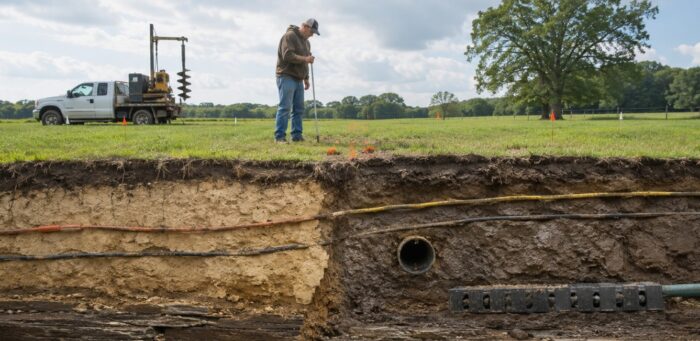
Before a single post goes in the ground, you need to know what’s beneath it. Rural properties often have buried utility lines, old drainage tile, septic fields, or rock ledges that weren’t obvious from a walk across the field. A call to your local utility locating service before you dig isn’t optional, it’s the step that keeps a fencing project from turning into an expensive repair.
Soil type matters just as much. Sandy soil holds posts differently than clay, and clay behaves differently when it’s wet versus bone dry. If you’re planning the project around a specific weekend, check the ground conditions first. Digging through saturated clay or frozen topsoil will slow you down no matter how good your equipment is.
Post-Hole Digging Across Acres Is a Different Job Than a Backyard Fence
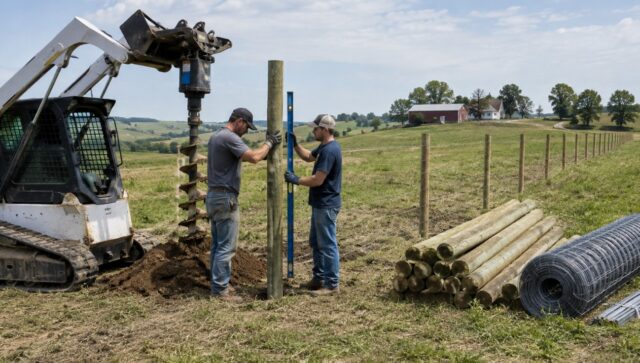
A hand auger or a two-person post-hole digger works fine for a dozen holes around a garden. It stops working fine somewhere around hole thirty, especially if the property has rocky or compacted soil. For post-hole work across acres of pasture, a lot of contractors rely on skid steer attachments like auger drives instead of digging by hand. An auger attachment can cut consistent, properly sized holes at a pace that would take a crew days to match manually, and it does it without the fatigue-driven mistakes that show up late in a long digging day, like holes that are too shallow or angled off-line.
Hole depth is worth getting right the first time. Line posts generally need to go at least 24 to 30 inches deep, and corner or gate posts need to go deeper and wider since they carry the most load. Skimping here is one of the most common reasons pasture fences lean or heave within a few seasons.
Compacting the Ground Around Every Post
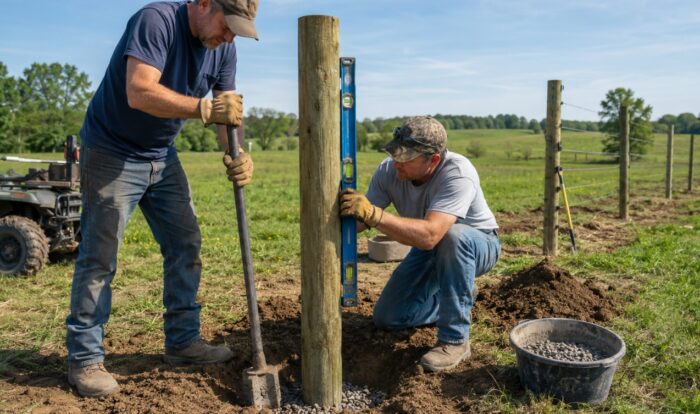
Setting a post isn’t just about getting it in the hole. The soil or concrete packed around it has to be compacted properly, or the post will shift the first time an animal leans on the fence or a winter freeze-thaw cycle works the ground loose. This is a step that’s easy to rush, especially near the end of a long day of digging.
A few things make a real difference in how well a post holds over time:
- Backfilling in layers rather than dumping soil in all at once, tamping each layer before adding the next
- Using crushed gravel at the base of the hole for drainage, especially in clay-heavy soil that holds water
- Checking that each post is plumb before the backfill sets, not after
Skip these steps and you’ll likely be resetting posts within a year or two, which costs more time in the long run than doing it right the first time.
Hauling Materials Across the Property
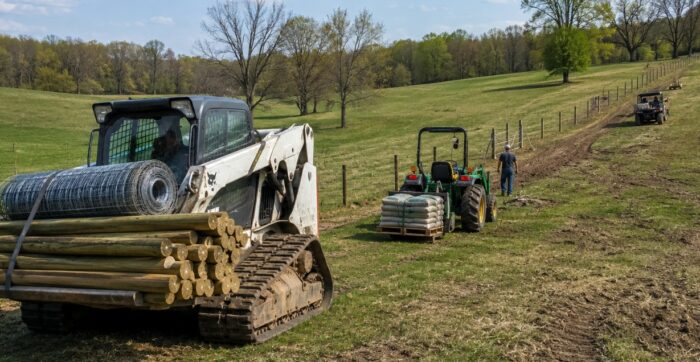
Pasture fencing runs long distances, and every post, roll of wire, and bag of concrete has to get from the truck to the fence line. On a small lot, that’s a wheelbarrow job. Across several acres of uneven pasture, it becomes a logistics problem, particularly if the terrain includes slopes, soft ground, or areas a standard truck can’t reach.
This is where a lot of DIY fencing projects lose momentum. Homeowners underestimate how much time gets spent moving materials rather than installing them. Renting or hiring equipment that can move pallets of posts and rolls of wire directly to where they’re needed cuts that transport time down significantly, which matters when you’re racing daylight or weather.
Deciding Whether to Hire a Contractor or DIY
Once you understand what the ground work actually involves, the hire-versus-DIY decision gets clearer. A short run of fence, good soil, and a flexible timeline can make DIY realistic, especially if you’re comfortable renting a auger attachment for a weekend. But a full pasture perimeter, rocky or clay soil, tight deadlines, or gate and corner posts that need to be set correctly the first time are all reasons to lean toward hiring it out.
Ask any contractor you’re considering a few direct questions before signing on:
- What equipment do they use for post-hole digging, and is it suited to your soil type
- How deep do they set line posts versus corner and gate posts
- What’s their timeline, and how does weather affect it
- Do they handle material delivery and placement, or is that on you
Budgeting for the Real Cost of Pasture Fencing
Material costs are the easy part to estimate. Labor and equipment costs are where budgets tend to go sideways, particularly if a DIY plan runs into rocky soil or a rented auger that can’t keep pace with the acreage. It’s worth pricing out both approaches, including equipment rental or contractor labor, before committing to one path over the other.
Getting a fence that holds up for years, rather than one that needs constant resetting, usually comes down to the parts of the job that aren’t visible once it’s finished: what’s underground, how deep the posts go, and how well the ground around them was compacted. Get that part right, and the rest of the project is straightforward.